My work here in Chiapas has included visiting schools to give workshops, which has often reminded me of the past few years I spent as a teacher. Those memories will always stay with me, as well as everything I learned. Actually, I might have learned more about reading as a teacher than as a student. Some of what I learned as a reading teacher might explain why reading the Bible here in Mexico has been different for me.
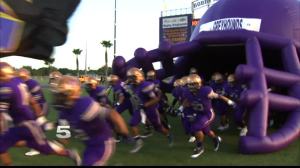
Many of my students in San Benito, Texas are big football fans. Their favorite team? The San Benito Greyhounds. (Photo by KRGV
After I gained experience teaching, I began to notice patterns as my students learned to understand and think about the stories we read in class. For example, I noticed that my students enjoyed and better comprehended stories that related to their lives. Any time we read a story about football, my students were able to tell me many similar stories of times when they attended local football games every fall growing up. They knew exactly what a football looked like, how a freshly-cut field smelled, and many knew multiple facts about their favorite players. Some teachers call this information “background knowledge.” Students who have a lot of background knowledge about a story tend to have higher comprehension than those who don’t. This is to say, life experience matters a lot when one reads. I will always remember a student who thought it was strange that a character in our book wore a “fleece.” She asked me, “Why would he put fleas on himself?!” In the hot climate of south Texas, my young student thought first of “fleas” rather than “fleece.” Isn’t it true that two people can hear the same thing and understand it very differently? This is also true when it comes to reading.
Living in Mexico has given me a lot of new background knowledge. Like my student who heard “fleas” instead of “fleece,” I am finding that I hear and read things differently than I did before. Particularly when I read the Bible, I have found new understanding and clarity in many passages. To show what I mean, here are a few examples:
1. Let the whole Earth tremble before the LORD; let all the inhabitants of the world stand in awe of Him. -Psalm 33:8
A teacher I had in middle school once told my class about a time she experienced an earthquake. I had seen them in movies before and one time slept through a rare, small tremor in my Indiana hometown. Obviously, none of this made me an earthquake expert. However, I had an idea of what to expect before moving to a place in Mexico where I might experience a real earthquake. I also had an idea of what the Psalmist meant by “let the whole Earth tremble before the LORD.” Waking up in the middle of the night to an 8.1-magnitude earthquake a few weeks ago brought all of that to light. What I thought I knew before didn’t quite capture the sense of fear, awe, and surrender that I felt when the Earth literally started to tremble that night. I wonder if the Psalmist had experienced an earthquake before writing these words. If so, perhaps he meant that standing in awe of God feels like an 8.1-magnitude earthquake. “Let the whole Earth tremble,” or rather, let the whole Earth feel completely out of control. Or, let the whole Earth turn all senses on high alert. Or even, let all people feel in their bones that they are being moved by something much bigger, stronger, and more powerful than themselves. Perhaps the Psalmist was writing to people who thought that they were in control of their own lives. I’m tempted to think the same way sometimes – that my planning, effort, and efficiency can get me to where I want to go in life. If so, then the Psalmist calls to me to “tremble before the LORD,” and know that I am not in control. Something bigger can always change my plans.
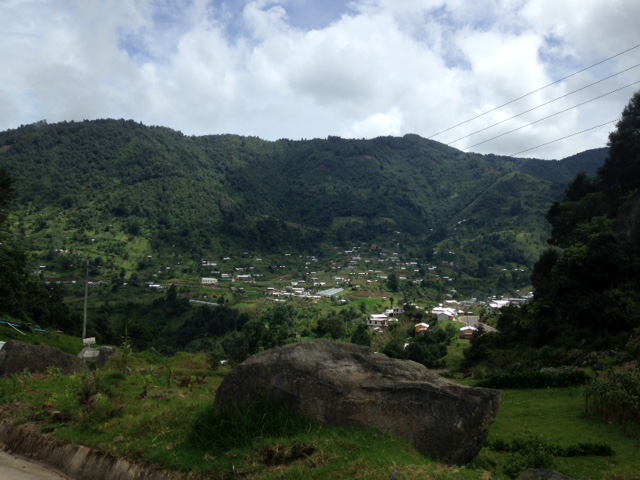
The mountains of Chiapas trembled during an Earthquake in October 2017.
2. You shall also love the stranger, for you were strangers in the land of Egypt. -Deuteronomy 10:19
God paid attention to the lives of immigrants, so God’s followers should do the same. Among the many commands that God gives Moses in the book of Deuteronomy, several have to do with how to treat non-Israelites who migrate to and through Israel. In other words, immigrants. Those rules have an obvious connection to my work with migration and being a “stranger” myself here in Mexico. Reading these words with new background knowledge makes them evermore clear. God is straightforward in his instructions to Moses about immigrants: love them. In fact, as I read through the Old Testament, this same instruction is reoccurring. A few of the instances I’ve recently read are in Deuteronomy 24:17, 26:5-10, and 27:19. Very often (more than in these passages) God commands his followers to show love, hospitality, and justice to immigrants. These commands are mixed together with multiple stories of migration. Take for example the Biblical stories of Sarah and Abraham, Naomi and Ruth, Joseph and Mary, or the apostle Paul. Even Jesus and his disciples did quite a bit of migrating during their lives. Throughout scripture, God is clearly present in the lives of these migrants, keeping them safe and using their movement to accomplish God’s plans. As a sort of immigrant myself, I now come to these stories with new questions. Did Sarah and Abraham ever get mixed up speaking a new language? Did Naomi and Ruth ever get lost on their way to the market in Bethlehem? Did Joseph and Mary like Egyptian food? Did Paul have to wait for hours in customs in Rome? I imagine that immigrants in the United States will come to these stories with other questions based on their particular experiences, too. Perhaps they might ask, did any of these Biblical migrants feel unwelcome? Were they ever mistreated? Was migrating their only option to escape violence or poverty? All of these questions will bring readers into deeper understanding of the text, and for Christians, a deeper understanding of God. Imagine all of the insight that is missed when Bible readers don’t take time to listen to the migration stories of immigrants in their own communities. How much more will Christians understand God when they embrace immigrants as their neighbor with love, hospitality, and justice!

Kelly Latimore’s depiction of Joseph, Mary, and Jesus’ journey to Egypt is called “Refugees: La Sagrada Familia,” or the holy family.
3. “Wait for the LORD” -Psalm 27:14
The word in Spanish for “wait” is the same word for “hope”. I’ve been paying attention to these translation details because I sometimes translate documents at work and I help my host sister with her English homework at home. Words like these present a challenge in translating Biblical passages, but also present an opportunity for understanding them better. How does one explain the difference between waiting and hoping? I gave this problem some thought and came to the idea that waiting for something means that one knows it will happen. Hoping for something means that one believes it will happen. So, if you will follow me, waiting goes with knowledge and hoping goes with belief. Knowledge has room for error because it can be proved true or false with logic. So in time, one will see if waiting pays off or not. Belief is more of an internal decision. Proving that a belief is true is not quite as clear and can be doubted. In the same way, hoping for something comes with a certain amount of doubt that it might not happen. Considering all of this, it becomes interesting to me that the Psalmist’s translators chose the word wait. The text says “wait for God,” or in other words, “know that God is going to act and allow time to prove it true.” In the light of seeing the difference between waiting and hoping, this lofty call also seems to say, “don’t doubt that God will move; don’t just hope, wait.” What a challenge! It’s funny – I almost thought that the biggest challenge in this text was the translation.

I walk past this “espera” graffiti on my way to work. The word means “hope” and “wait” in English. Which translation would the graffiti artist choose?
 inactive