What’s it like to learn bats’i k’op?

When I had the choice to take a language class in 7th grade, my dad’s wisdom was to learn Spanish. He predicted what has become true, that speaking Spanish would be endlessly helpful in my life. By one measure, the United States is already the home to the second largest Spanish-speaking population in the world. Learning Spanish has since opened up communication between me and 559 million people worldwide, which adds to the 527 million native English speakers that I could already communicate with. (Who knows how many non-native English speakers exist.) So to put it simply, learning Spanish was a great idea. However, aside from its obvious benefits of being able to travel widely and communicate with at least twice as many people, learning a new language is valuable because it opens up new ways of thinking. Let me tell you why learning a new language, even one that only 21,000 people speak in a small, beautiful corner of the world, is worth it.

Quinn and Elena

Me with Elena, my friend and Tsotsil teacher

Before colonization introduced the Spanish language to southern Mexico and Central America, the native Mayans in the region had their own language which has since has carried encouragement and hope in its words through generations of enslavement, discrimination, violence. Today, some estimate that there are 56 linguistic groups in Chiapas which trace their roots to an old Mayan language. I’ve recently begun learning one of these languages, Tsotsil, the language of my host family and some of the communities where I work. Several communities in the area speak their own variation of Tsotsil, which is mostly understandable among native speakers, but has strong distinctions. I am learning Tsotsil from the Huixtan community, where my host family is from. A Google search tells me that there are around 21,000 people living in Huixtan, which means there is probably one person who speaks the Huixtan variation of Tsotsil for every 26,600 Spanish speakers in the world. So if the benefits of traveling widely and being able to communicate with nearly an entire continent don’t apply to learning Tsotsil, what are the benefits? I have learned to think of the world in new ways, even by just learning a few phrases, because ideas are expressed uniquely in different languages. Here are a few words and their literal translations in Tsotsil that have let me think in new ways, and ultimately, see the world with more nuance and color:

1. bats’i k’op – Tsotsil, literally “natural, true word”

How do you say Tsotsil in Tsotsil? Actually, there is no word. The way someone from Huixtan would find out if I speak Tsotsil would be to ask me, “Do you speak our natural, true word?” That is to say, speaking Spanish as a Tsotsil-speaking Mayan descendant is unnatural. For me, this is a clue to understanding how Mayan people see themselves in the light of Spanish colonization. The imposition of a foreign culture, language, economy on another people is unnatural. It’s not how things should be.

2. ok’on to – goodnight, literally “tomorrow, still”

There’s something really hopeful about this way of ending a day. I think it’s wrapped up in the symbolism of sundown, which brings to mind old western movies that end with cowboys riding off into the sunset. Day turning to night is such a powerful symbol of closure because everyone can relate to a day’s end. Night just as well symbolizes the rest time before morning, new beginnings. In times of bad news and desperation, the daily reminder that tomorrow is yet to come is a word of hope. The sun is sure to rise again. Ok’on to.

3. nichim ko’nton – I’m happy or it’s a pleasure, literally “my heart is flowering”

This phrase is said whenever someone is welcomed into a home, or meets a new person, or thanks someone for a favor. In Tsotsil, attention is given to the heart. “How do you feel?” sounds more like “how is your heart?” When one feels good, their heart is like a healthy patch of land full of flowers. Living in a new country requires a lot of vulnerability and getting used to feeling confused or lost. This phrase has called on me to pay more attention to when my heart is dry and when it is flowering.
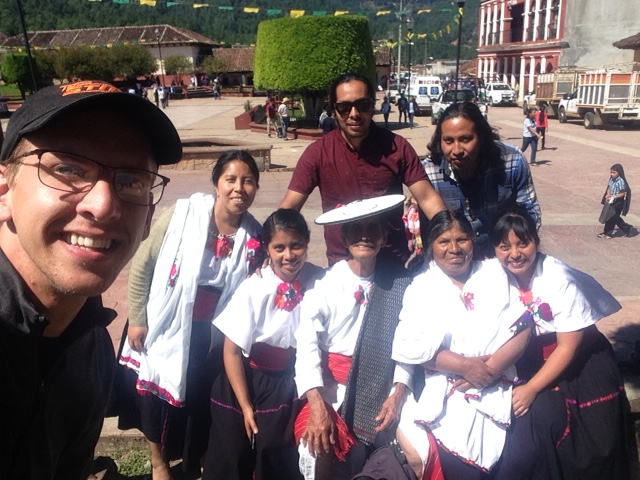
image2

Me with my host family who are donning their traditional clothing from Huixtan when we visited for a community celebration back in October.

A Christmas Story Among the Displaced

“I can only imagine the fear that Mary and Joseph felt, the same fear that Laguna Larga families feel right now,…”

WhatsApp Image 2017-12-20 at 1.16.13 PM

Celebrating Christmas away from home was new for me this year. I’ve enjoyed experiencing other traditions that I will likely take back with me to the United States. A few weeks ago, I went on a trip that left me with memories I will also probably carry with me for a while. Here’s a blog post I wrote for the MCC LACA website that tells a little bit about my trip.

Thanksgiving and Travels

I have a lot to be thankful for this year. From wonderful friends and colleagues to opportunities and adventures, this year has been full of goodness. Since my last post, I celebrated an ex-pat style Thanksgiving, kept a few Christmas traditions, and went on a retreat with the MCC Mexico team to Durango, Mexico to visit the old-order Mennonite colonies. Here are pictures from the last few weeks:

image1 (2)

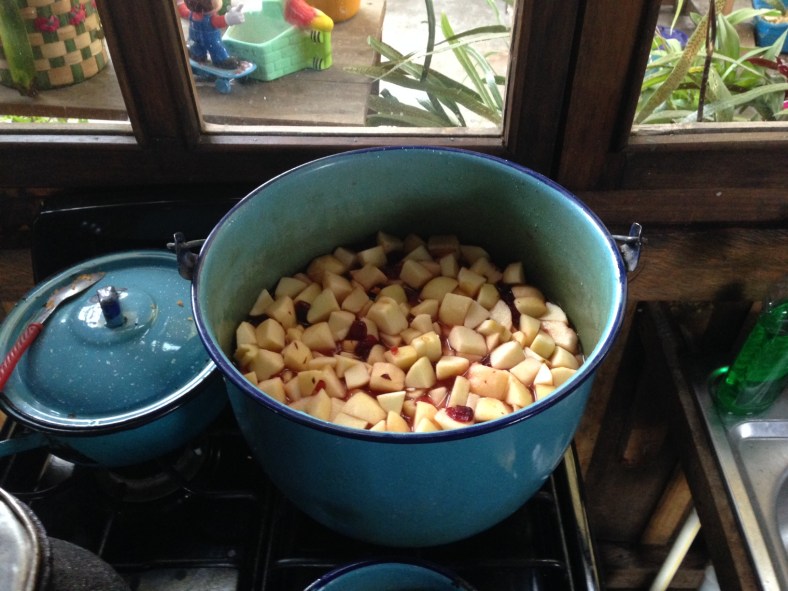
Chris and Lindsey, other MCCers here in Chiapas, invited me to their home for Thanksgiving. I decided to bring cran-apple sauce, or as we call it in my family, crapple sauce. However, I had to get creative when I couldn´t find cranberries in the market.

image1 (3)

In my haste at the grocery store, I didn´t notice that I purchased crasins with “chile and salt” flavoring. As it turns out, some mistakes lead to new creations, and spicy crapple was a hit!

image1

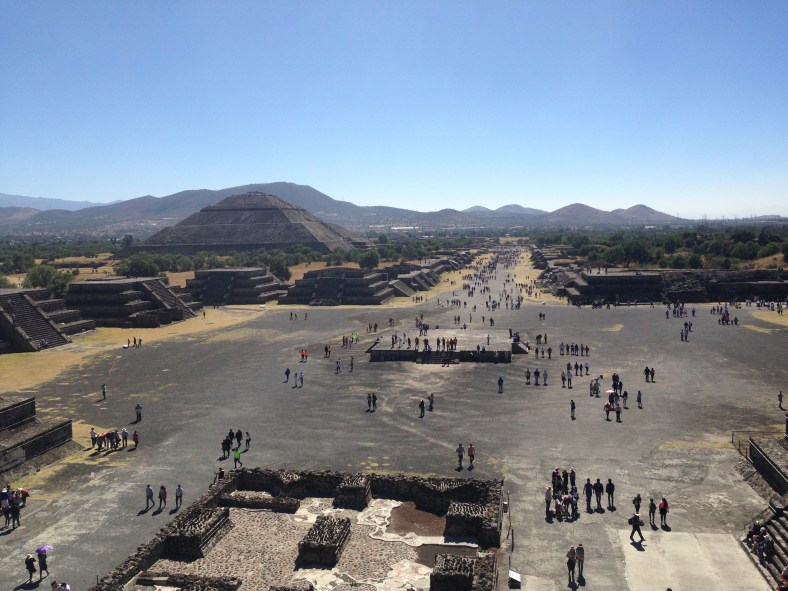
When I first learned about Teotihuacán in my 7th grade Spanish class, I knew that I wanted to visit. I recently got to check that dream off the bucket list!

image1 (1)

I love how the architects of Teotihuacán created structres that resemebled the natural beauty around them. It reminded me that as people “made in God´s image,” we are made to be creators who imitate the Creator. (Gen. 1:26)

image1 (5)

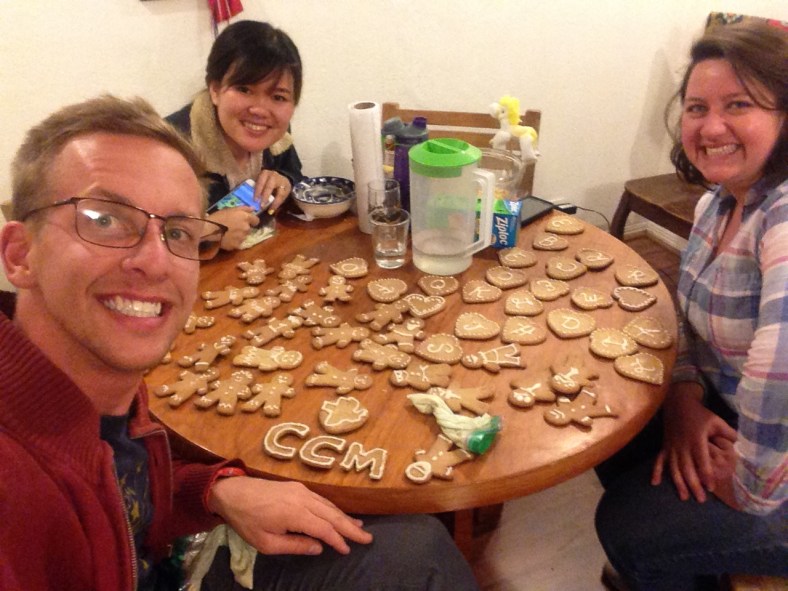
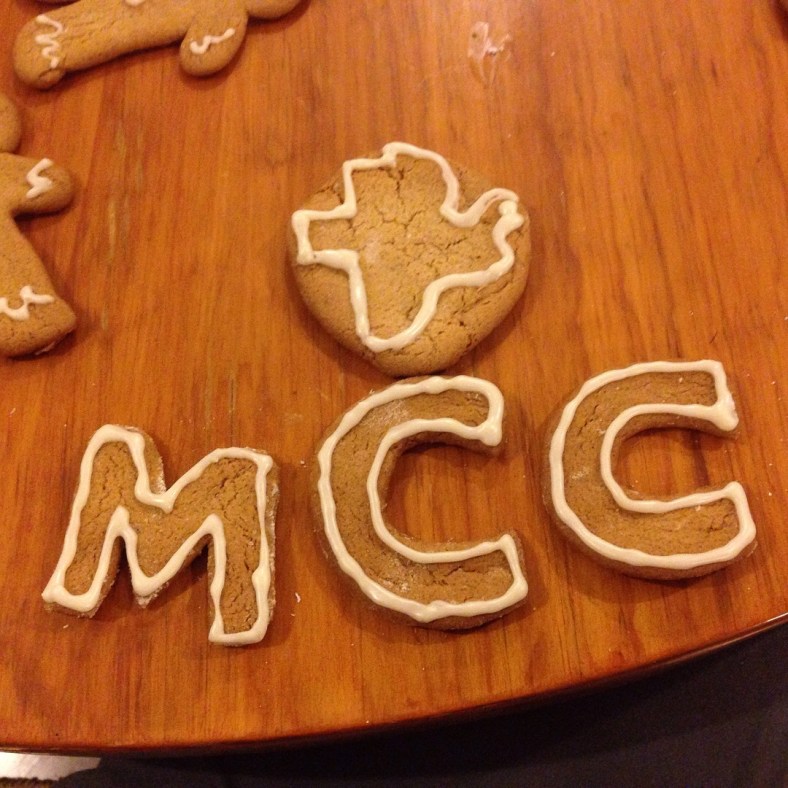
Me, Soleab, a fellow MCCer in the YAMEN program, and Erica, our MCC supervisor, baked gingerbread cookies for the MCC reatreat. The Sufjan Steven´s Christmas album especially helped inspire the Christmas spirit.

image1 (4)

Feliz navidad from the MCC México family!

image1 (6)

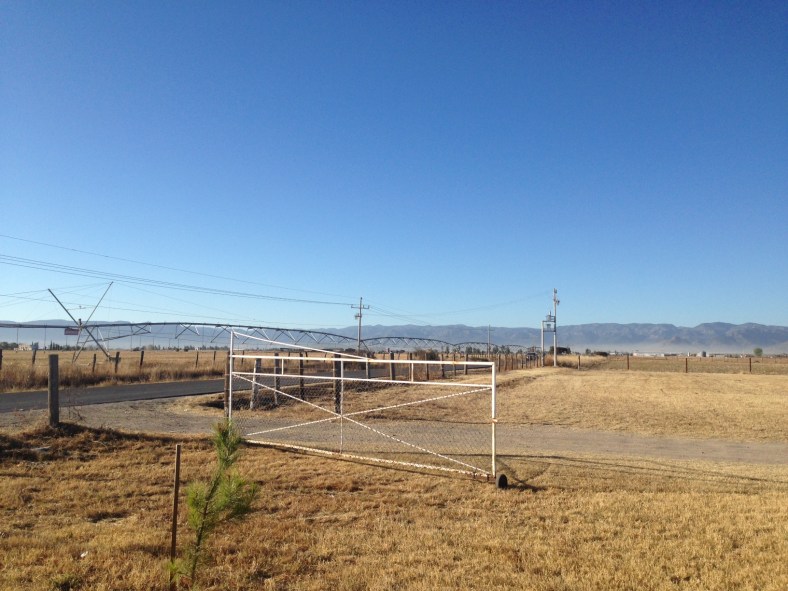
The views from the Mennonite colonies in Durango, Mexico reminded me of some kind of combination of rural Indiana and Arizona. If those large irrigation machines are any indication, the Mennonite farmers have seen somewhere between a 60- and 70- foot loss of annual rainfall in the past two decades. The weather is more unpredictable, making farming and livelihood equally so. I´ll leave the facts to explain climate change for themselves.

image1 (9)

Mennonites arrived to Mexico in the midst of centries of fleeing countries that wanted to force them to take up arms and fight in wars. Staying true to Jesus´teachings of peace and nonviolence, this small religious group chose instead to migrate to new lands. The families we visited have a family migration route that spans central Europe, Russia, Canada, and Mexico.

image1 (11)

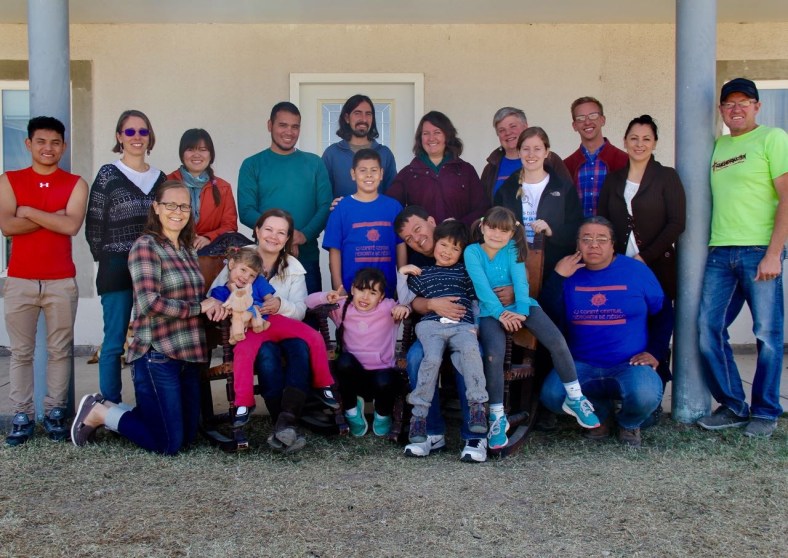
The MCC retreat felt to me like a family get-together. We sang Christmas songs, did a gift exchange, the kids played with the dogs outside… Can´t you just see the fun in these faces? (Thanks for the picture, Oscar!)

image1 (12)

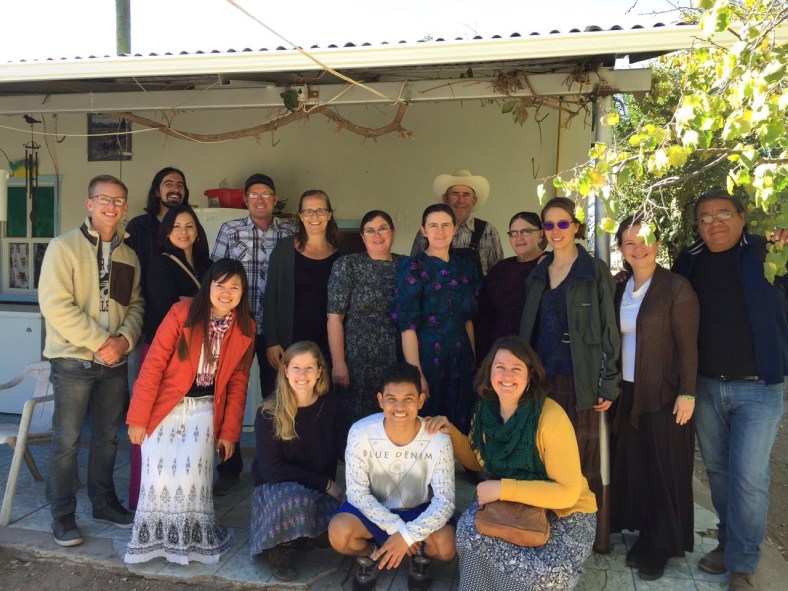
In this season of thankfulness, I often think of this group of people that serves in different capacities all over Mexico. I am thankful for the work they do, the hearts they have, and especially for the times we have together.

Reading the Bible in Mexico

My work here in Chiapas has included visiting schools to give workshops, which has often reminded me of the past few years I spent as a teacher. Those memories will always stay with me, as well as everything I learned. Actually, I might have learned more about reading as a teacher than as a student. Some of what I learned as a reading teacher might explain why reading the Bible here in Mexico has been different for me.

12071014_G

Many of my students in San Benito, Texas are big football fans. Their favorite team? The San Benito Greyhounds. (Photo by KRGV

After I gained experience teaching, I began to notice patterns as my students learned to understand and think about the stories we read in class. For example, I noticed that my students enjoyed and better comprehended stories that related to their lives. Any time we read a story about football, my students were able to tell me many similar stories of times when they attended local football games every fall growing up. They knew exactly what a football looked like, how a freshly-cut field smelled, and many knew multiple facts about their favorite players. Some teachers call this information “background knowledge.” Students who have a lot of background knowledge about a story tend to have higher comprehension than those who don’t. This is to say, life experience matters a lot when one reads. I will always remember a student who thought it was strange that a character in our book wore a “fleece.” She asked me, “Why would he put fleas on himself?!” In the hot climate of south Texas, my young student thought first of “fleas” rather than “fleece.” Isn’t it true that two people can hear the same thing and understand it very differently? This is also true when it comes to reading. 

Living in Mexico has given me a lot of new background knowledge. Like my student who heard “fleas” instead of “fleece,” I am finding that I hear and read things differently than I did before. Particularly when I read the Bible, I have found new understanding and clarity in many passages. To show what I mean, here are a few examples:

1. Let the whole Earth tremble before the LORD; let all the inhabitants of the world stand in awe of Him. -Psalm 33:8

A teacher I had in middle school once told my class about a time she experienced an earthquake. I had seen them in movies before and one time slept through a rare, small tremor in my Indiana hometown. Obviously, none of this made me an earthquake expert. However, I had an idea of what to expect before moving to a place in Mexico where I might experience a real earthquake. I also had an idea of what the Psalmist meant by “let the whole Earth tremble before the LORD.” Waking up in the middle of the night to an 8.1-magnitude earthquake a few weeks ago brought all of that to light. What I thought I knew before didn’t quite capture the sense of fear, awe, and surrender that I felt when the Earth literally started to tremble that night. I wonder if the Psalmist had experienced an earthquake before writing these words. If so, perhaps he meant that standing in awe of God feels like an 8.1-magnitude earthquake. “Let the whole Earth tremble,” or rather, let the whole Earth feel completely out of control. Or, let the whole Earth turn all senses on high alert. Or even, let all people feel in their bones that they are being moved by something much bigger, stronger, and more powerful than themselves. Perhaps the Psalmist was writing to people who thought that they were in control of their own lives. I’m tempted to think the same way sometimes – that my planning, effort, and efficiency can get me to where I want to go in life. If so, then the Psalmist calls to me to “tremble before the LORD,” and know that I am not in control. Something bigger can always change my plans.

image2

The mountains of Chiapas trembled during an Earthquake in October 2017. 

2. You shall also love the stranger, for you were strangers in the land of Egypt. -Deuteronomy 10:19

God paid attention to the lives of immigrants, so God’s followers should do the same. Among the many commands that God gives Moses in the book of Deuteronomy, several have to do with how to treat non-Israelites who migrate to and through Israel. In other words, immigrants. Those rules have an obvious connection to my work with migration and being a “stranger” myself here in Mexico. Reading these words with new background knowledge makes them evermore clear. God is straightforward in his instructions to Moses about immigrants: love them. In fact, as I read through the Old Testament, this same instruction is reoccurring. A few of the instances I’ve recently read are in Deuteronomy 24:17, 26:5-10, and 27:19. Very often (more than in these passages) God commands his followers to show love, hospitality, and justice to immigrants. These commands are mixed together with multiple stories of migration. Take for example the Biblical stories of Sarah and Abraham, Naomi and Ruth, Joseph and Mary, or the apostle Paul. Even Jesus and his disciples did quite a bit of migrating during their lives. Throughout scripture, God is clearly present in the lives of these migrants, keeping them safe and using their movement to accomplish God’s plans. As a sort of immigrant myself, I now come to these stories with new questions. Did Sarah and Abraham ever get mixed up speaking a new language? Did Naomi and Ruth ever get lost on their way to the market in Bethlehem? Did Joseph and Mary like Egyptian food? Did Paul have to wait for hours in customs in Rome? I imagine that immigrants in the United States will come to these stories with other questions based on their particular experiences, too. Perhaps they might ask, did any of these Biblical migrants feel unwelcome? Were they ever mistreated? Was migrating their only option to escape violence or poverty? All of these questions will bring readers into deeper understanding of the text, and for Christians, a deeper understanding of God. Imagine all of the insight that is missed when Bible readers don’t take time to listen to the migration stories of immigrants in their own communities. How much more will Christians understand God when they embrace immigrants as their neighbor with love, hospitality, and justice!

16730646_10100841668636502_3794399088060836889_n

Kelly Latimore’s depiction of Joseph, Mary, and Jesus’ journey to Egypt is called “Refugees: La Sagrada Familia,” or the holy family.

3. “Wait for the LORD” -Psalm 27:14

The word in Spanish for “wait” is the same word for “hope”. I’ve been paying attention to these translation details because I sometimes translate documents at work and I help my host sister with her English homework at home. Words like these present a challenge in translating Biblical passages, but also present an opportunity for understanding them better. How does one explain the difference between waiting and hoping? I gave this problem some thought and came to the idea that waiting for something means that one knows it will happen. Hoping for something means that one believes it will happen. So, if you will follow me, waiting goes with knowledge and hoping goes with belief. Knowledge has room for error because it can be proved true or false with logic. So in time, one will see if waiting pays off or not. Belief is more of an internal decision. Proving that a belief is true is not quite as clear and can be doubted. In the same way, hoping for something comes with a certain amount of doubt that it might not happen. Considering all of this, it becomes interesting to me that the Psalmist’s translators chose the word wait. The text says “wait for God,” or in other words, “know that God is going to act and allow time to prove it true.” In the light of seeing the difference between waiting and hoping, this lofty call also seems to say, “don’t doubt that God will move; don’t just hope, wait.” What a challenge! It’s funny – I almost thought that the biggest challenge in this text was the translation.

image1

I walk past this “espera” graffiti on my way to work. The word means “hope” and “wait” in English. Which translation would the graffiti artist choose?

Familiar in Four Frames

A month has passed since I first moved to Chiapas, Mexico. Although my days are still filled with a lot of new experiences, I am starting to find a routine that makes this new place seem familiar. Here are some shots of what “familiar” looks like to me these days.

WhatsApp Image 2017-09-26 at 7.22.54 PM

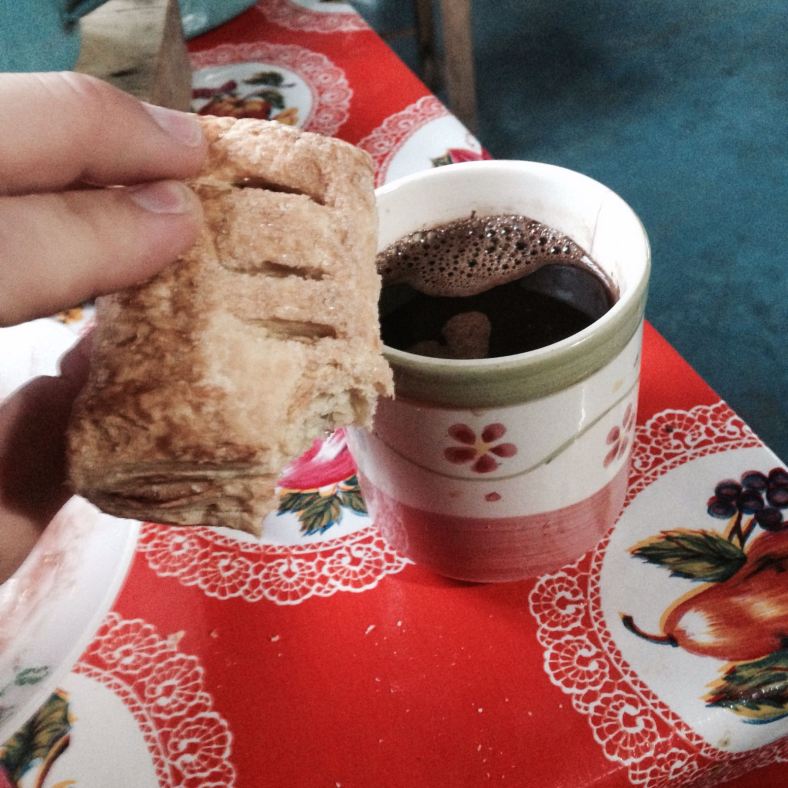
Usually I eat eggs or quesadillas or veggies for breakfast with coffee that we make in a pot on the stove. (It’s good – almost too good.) If I’m really lucky we have sweet bread too. My host family also sometimes has sweet bead and tea at the end of the day before bed time.

WhatsApp Image 2017-09-26 at 7.22.44 PM

My host family’s home is decorated with many potted plants that make me feel like I live in a garden. We also have two little kittens that I think pretty smart, trilingual even. You can say “It’s time to eat!” in Tzotzil, Spanish, or English, and they will always come running.

WhatsApp Image 2017-09-26 at 6.32.27 PM (1)

These high school students in Huixtan, Chiapas are discussing what they like about their community and what they’d like to change. I travel to communities about two days a week to give workshops to young people like these guys.

WhatsApp Image 2017-09-26 at 6.59.34 PM

After a day of traveling, giving workshops, and meetings in the office, I enjoy my long walk home. Those walks are made even better when I stop for a 10-peso fruit bar. This tamarind flavored one is my favorite.


Two Weeks in Five Titles

Several titles could have been appropriate for this blog post. At least two weeks have gone by since I last wrote and I’ve experienced a lot of transitions in that time. As a friend pointed out to me: I’m living with a new family, in a new house, in a new country, with a new job, in a new organization. I guess when you put it like that, maybe an appropriate title for this blog post would be, “Ahhh! Everything is New!!” However, I wouldn’t want anyone to believe that I’m drowning in all of these transitions. I would say that I’m mostly floating, maybe even swimming a little bit. Everything I have learned has made these first few weeks quite exciting. With new learning in mind, perhaps appropriate titles could be, “Words Ending In -A, -E, or -O for $500” or “Fuzzy Friend or Poisonous Caterpillar?” or “Where to Start When There are Five Lines at the Paper Store” or “San Cris Is Not Good For Ending My Coffee Addiction”. Any of those titles could start a blog post that tells a short story about my life since moving to San Cristobal. However, no single story tells it all. That’s something I’ve learned since being here. So, in celebration of the many stories that make up our lives, here are several titles that summarize just a little bit about mine:

How Do You Say Nice View in Tzotzil?

IMG_2066


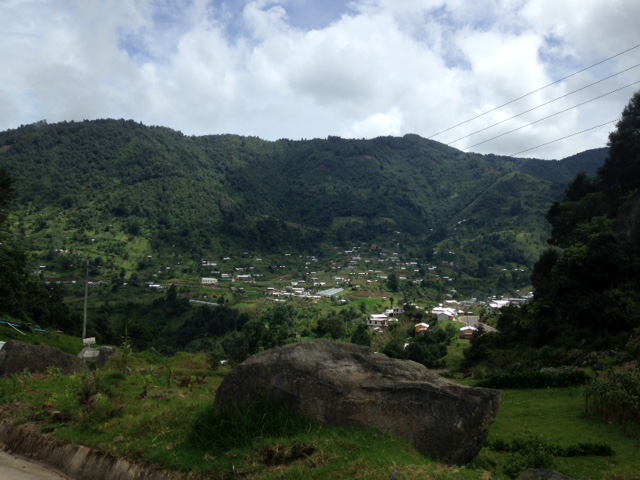
I live with a host mother and father, a host sister that works with a fellow MCCer, and another host sister and her husband. At home my host family speaks Tzotzil, a language spoken by an ethnic group of Mayan descendants. Also, we have a great view of the green mountains of Chiapas.


Critical Reflection with Crayolas

30 DE AGOSTO TALLER CRUZTON (63)

At least once or twice a week, I travel to rural communities in the mountains. I’m working on a project with my coworkers to provide workshops to children and youth in these communities about their right to access public information. We usually ask them to draw pictures of their communities that include things they like and things they hope will change. Then, we explain how they can access public information that might help them make those changes some day.


I’d Give That One an 8.1

IMG_2097

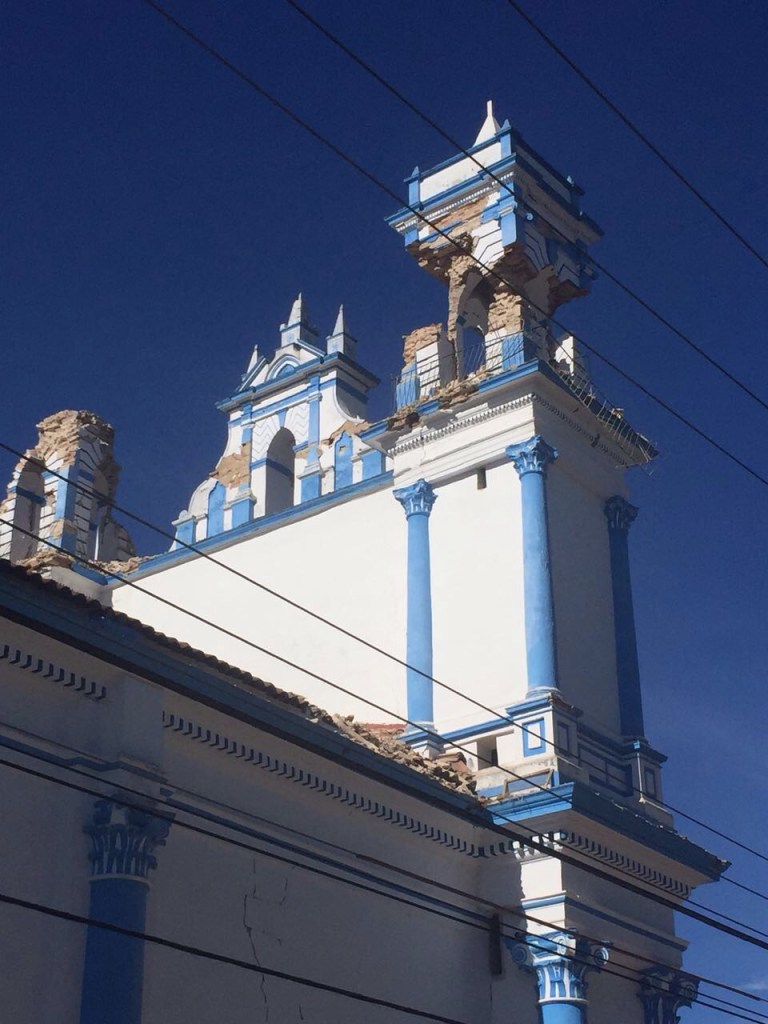
I woke up when my bed started shaking around midnight on Friday morning, September 8. “My first earthquake experience!” I thought. I felt like I was on a ship tossing on rough waves. As a guy from the flat plains of Indiana, I didn’t realize that earthquakes aren’t usually that strong. Shortly after the tremor ended, MCC colleagues and coworkers started sending texts asking if everyone was okay. The 8.1 earthquake left damage to large, old churches in San Cristobal, and scared those of us living here. I feel lucky to say that I’m safe and that my home is okay.


If I Had a “Typical Day,” It Might Look Like This

6:30 – wake up and listen to a few songs in bed

7:00 – walk to the kitchen to warm up water for a shower and eat quesadillas

8:00 – leave the house and walk to the cathedral

8:30 – meet coworkers at cathedral and walk to work

9:00 – arrive at work, pour myself some coffee

9:15 – discuss with my team what we will be doing for the day

11:30 – drink coffee and share snacks with coworkers

2:00 – share lunch with coworkers or go somewhere to eat together

5:00 – pack things up at work and start walking home

6:00 – arrive home, eat a snack, read a little (currently, The Kite Runner by Khaled Hosseini)

8:00 – drink tea and eat sweet bread with my host family

9:30 – get ready for bed and fall asleep under two large blankets


Some Pictures Are Worth More Than 1,000 Words

IMG_2083

I woke up to this view one morning after spending the night in a rural community. This one has to be worth more than 1,000 words, I’m convinced.

Orientation at the Welcoming Place (English)

I arrived in Mexico City a few nights ago and woke up the next morning in the MCC office guest rooms where I am still staying. Andrew, another SALTer in Mexico, and I are doing some in-country orientation for a few days before I take off to Chiapas to settle into my new life for the next year. I arrived in Mexico feeling supported and excited after spending a week in Akron, Pennsylvania at MCC’s Welcoming Place, or headquarters, for another orientation. That week was filled with information, reflection, and discussion, but what I’ll most likely remember besides my new friends is a basket of umbrellas. I’ll get to that, but let me back up for a second.

Mennonite Central Committee started as an idea in a basement Bible study in the early 1900s when a group of Mennonites in Elkhart, Indiana received correspondence that kindred Mennonites in Europe were starving. The group organized and delivered needed supplies, traversing miles and seas, to relieve a famine. Years later, after that project had become a memory and paperwork in storage files, the same Mennonites reinvented the “Mennonite Central Committee” with the goal of uniting Mennonites around the world with the common goal of providing assistance for all kinds of needs. That Bible study outreach project has since grown into a multinational organization that will celebrate its 100th birthday in 2020. Today, MCC works around the world in the areas of relief, development, and peacebuilding, serving people of all nations and faiths.

As time has passed, some things about MCC have changed. When J. Ron Byler, the executive director of MCC US talked to us about MCC’s history and work during orientation, he described MCC’s work today as being relationship rich and program poor. For example, my work with MCC will be to support a local organization in southern Mexico that works with migration. Instead of creating its own program in southern Mexico, MCC formed a local relationship and supports work already being done by people who are experts in the context because it’s their home. This relational thing seems to be big for MCC.

Here’s where the umbrellas come in. At the door of every building on the Welcoming Place campus is a basket filled with umbrellas. Next to each basket is a sign that says something like, ‘if you need an umbrella to get to another building, borrow one of these and leave it in the basket at the door of where you are going.’ It seemed to me such a simple way of encouraging people to trust each other. If I used one of those umbrellas, I felt responsible for not losing it or misplacing it because I knew that other people at the Welcoming Place might also need it. In the same way, I could trust that I didn’t need to bring an umbrella with me everywhere because the whole campus had a shared set. I thought that this simple umbrella-sharing system seemed to hint at something larger.

IMG_2021

Living in community and building relationships requires one to take risks. I could have easily lost one of those umbrellas, and hypothetically MCC could one day be without any umbrellas at all if that continued to happen. However, the sense of community and trust that a shared umbrella system creates is clearly more valuable to MCC than the risk of needing to occasionally purchase new umbrellas when folks lose them. If MCC is willing to take a risk to build community, I wondered what I am willing to take risks for. I imagine that this year will be full of risks for me, and that is an idea that I am getting used to. However, I know that some risks are worth taking because the journey I will walk this year has been walked before. The first MCCers, who took a risk to feed their starving brethren, found confidence by reading stories in their Bible study of someone who took a risk centuries before to “bring good news to the poor… proclaim release to the captives and recovery of sight to the blind, to let the oppressed go free, [and] to proclaim the year of the Lord’s favor.” (Luke 4:18) Some risks are worth it. I can’t predict what this year will hold for me, but I hope that when given the chance to take a risk in order to see this “good news” I will take it.